

A Stellar Association of Remarkable Scale
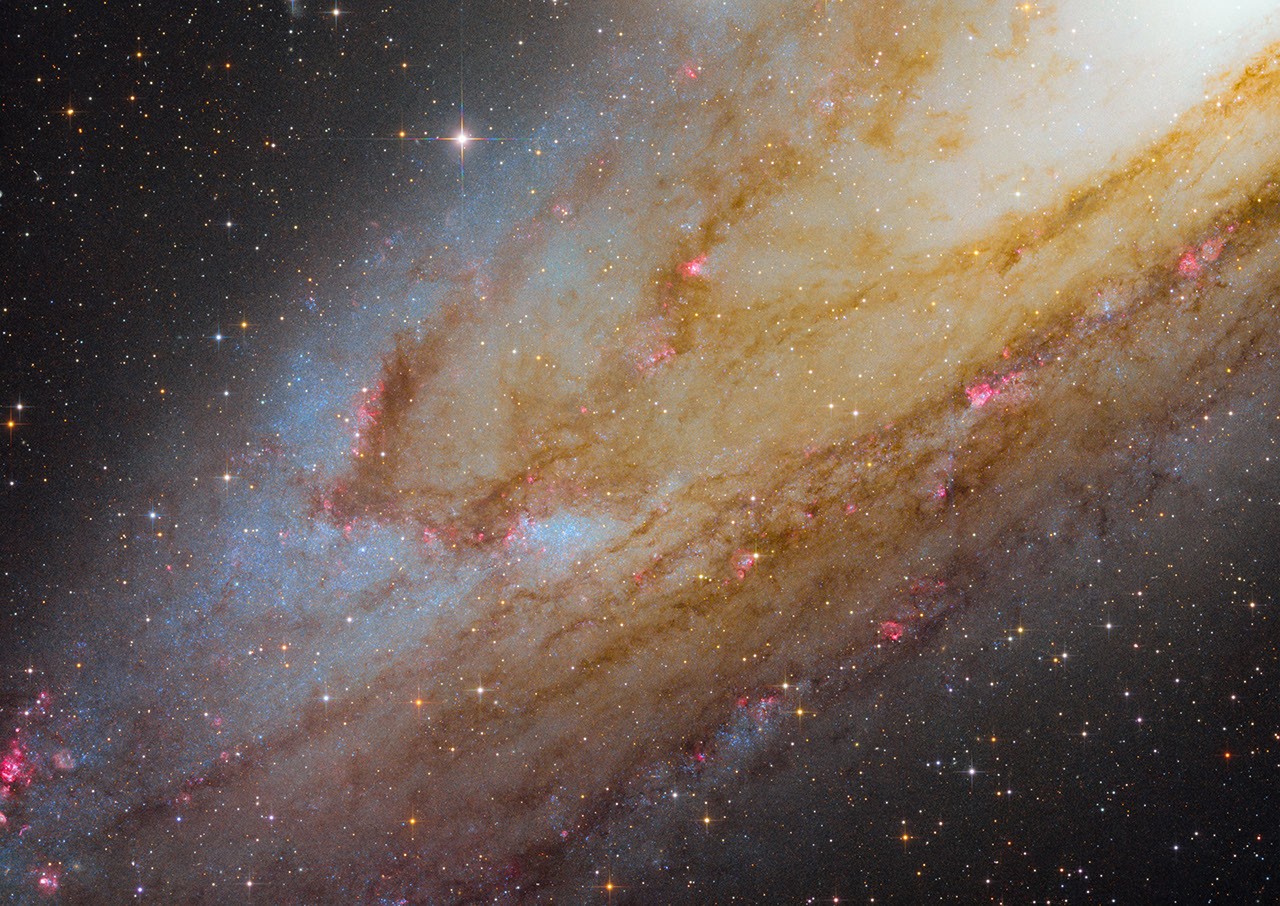
NGC 206 stands out as a significantly larger structure than the open or galactic clusters of young stars found in the disk of our own Milky Way galaxy. Spanning approximately 4,000 light-years, this stellar association rivals the size of other famous giant stellar nurseries in the local universe. Its scale is comparable to NGC 604, located in the nearby spiral galaxy M33, and to the Tarantula Nebula, which resides in the Large Magellanic Cloud. This impressive size underscores the massive scale of star formation activity occurring within Andromeda's spiral arms.
Youthful Stars Illuminate Andromeda
The bright, blue stars that characterize NGC 206 serve as clear indicators of its youth. According to the APOD explanation written by professional astronomers, the youngest massive stars within this association are less than 10 million years old. This relative youth makes NGC 206 an important subject for studying recent and ongoing star formation processes in a neighboring galaxy. The blue coloration of these massive stars results from their high surface temperatures, typical of young, hot stellar populations that have not yet exhausted their nuclear fuel.
Andromeda: Our Galactic Neighbor
The Andromeda galaxy, cataloged as M31, is a spiral galaxy located approximately 2.5 million light-years from Earth, making it one of our closest galactic neighbors. The image focuses on the southwestern extent of Andromeda's disk, providing a detailed view of this region. NGC 206 appears at the center of this close-up, surrounded by the galaxy's characteristic dusty arms and pinkish star-forming regions. These pinkish areas indicate the presence of hydrogen gas ionized by the intense radiation from newly formed stars.
APOD: Daily Window to the Universe
NASA's Astronomy Picture of the Day presents a different image or photograph of the universe each day, accompanied by a brief explanation written by a professional astronomer. The November 13, 2026 edition features an image credited to David Cruz. The APOD service is provided by the Astrophysics Science Division at NASA's Goddard Space Flight Center, in collaboration with NASA Science Activation and Michigan Technological University. The image article is part of NASA's ongoing effort to share the wonders of the cosmos with the public.




Join the Conversation
Moderated reader discussion · Community standards apply